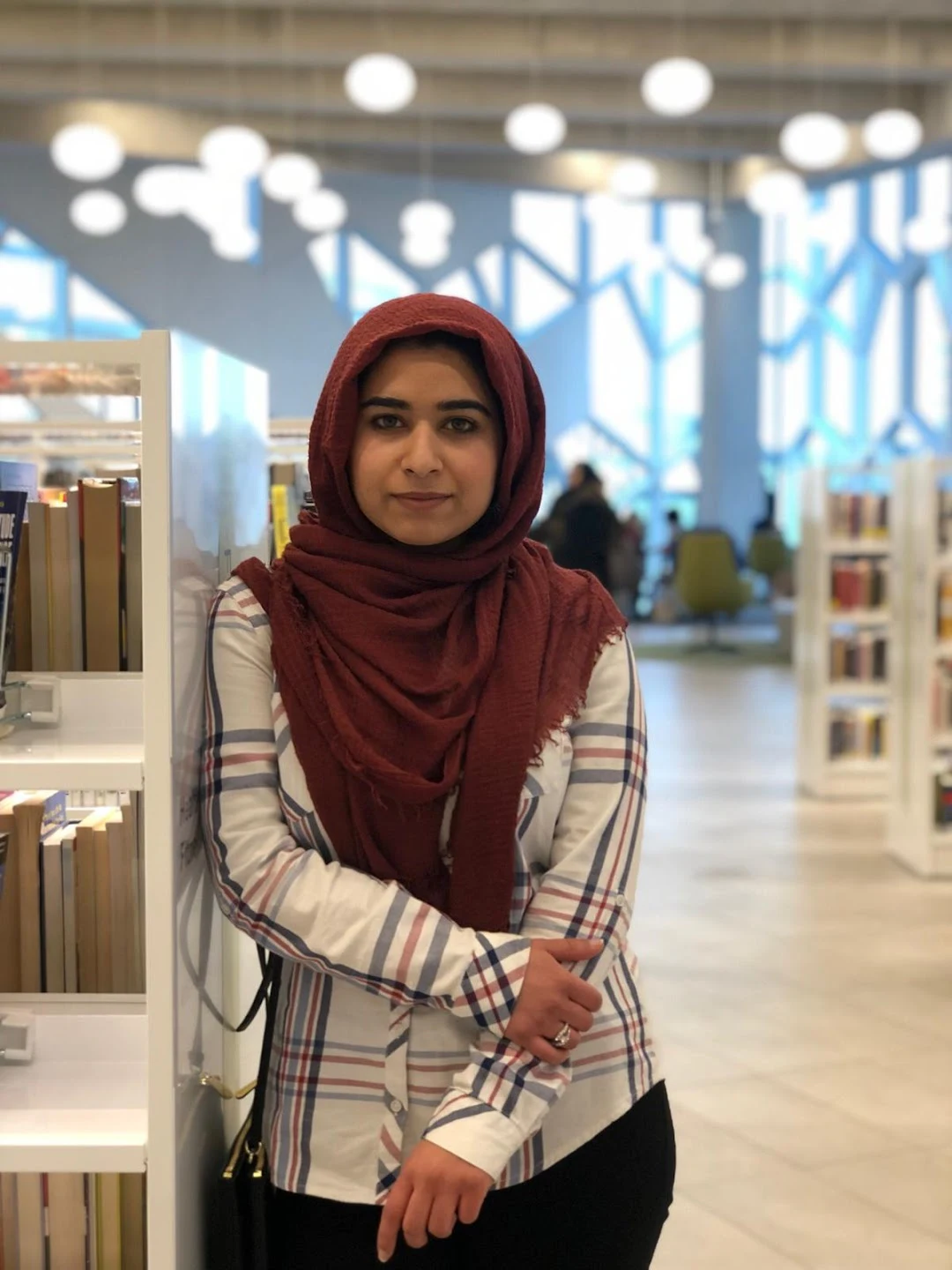
The first thing many of them say, after the small talk fades, is some version of this:
"I almost didn't book."
Sometimes they explain. I wasn't sure if therapy is halal. I didn't want a non-Muslim therapist who would tell me to leave my deen. I was worried someone in the community would find out. My husband didn't want me to come. I told myself I should just be making more dua.
And then, often, the next sentence: I have been carrying this for years.
If you are reading this and you have not booked, I want to speak directly to you. Not as a scholar, because I am not one. As a Registered Psychotherapist who is also a Muslim woman, and who has heard a version of your hesitation hundreds of times.
The Short Answer
Yes, therapy is generally considered halal (permissible) in Islam, and is widely endorsed by Muslim scholars and Islamic mental-health institutions. Seeking medical and psychological care is consistent with the Islamic principle of taking the means (tawakkul alongside al-akhdh bi-l-asbaab). The Prophet ﷺ said, "Seek treatment, O servants of Allah, for Allah has not made a disease without making a cure for it." This is reported in Sunan Abi Dawud and authenticated by classical scholars.
That is the short answer to is therapy halal. But the long answer is what most people actually need.
What People Are Really Asking
When a Muslim client asks me is therapy halal, they almost never mean please give me a fatwa. They mean something deeper and more vulnerable. Usually one of these:
- Will this therapist tell me to leave my religion?
- Will I be asked to do something that conflicts with my faith?
- Will my pain be reduced to "trauma" and my faith dismissed as the cause?
- Will modesty be respected?
- Will my marriage be pathologized because it does not look Western?
- Will I have to choose between healing and being a good Muslim?
These are not theological questions. They are trust questions. And they deserve real answers, not a one-line reassurance.
So let me address them, one by one.
Will the Therapist Tell Me to Leave Islam?
A well-trained, ethically practicing Registered Psychotherapist will not tell you what to believe. That is outside our scope of practice. The CRPO professional standards in Ontario explicitly require us to respect client autonomy, including religious and cultural identity.
I have had Muslim clients arrive after one or two sessions with another therapist where their faith was treated as a contributing factor to their suffering, "have you considered that your religion is part of the problem?" That is poor practice. It is also why this concern is real and worth checking.
The way to protect yourself is to ask in the first call. How do you work with clients for whom faith is central? The answer will tell you everything.
Will I Be Asked to Do Something That Conflicts With My Faith?
Standard evidence-based therapies (CBT, EMDR, Gottman Method, somatic work, Acceptance and Commitment Therapy) do not require anything that conflicts with Islamic practice. They are clinical procedures. You are not being asked to adopt new beliefs.
There are specific moments where a faith-aware therapist will work with your faith rather than around it. A standard CBT exercise might ask you to identify negative thought patterns; a faith-aware therapist might do exactly the same exercise and let you bring Qur'anic verses or du'a into the cognitive reframing if that strengthens it for you. Same intervention. More integrated.
There is also a growing body of clinical work in North America on Islamically integrated psychotherapy, frameworks that explicitly weave Islamic theology and tradition into evidence-based clinical practice. The approach is not new in spirit, but the formal training and literature have expanded significantly in the last decade. In my own practice, I draw on similar principles when a client wants their faith actively present in the work, and I can connect you with clinicians who have done that specific training when a client wants that level of explicit integration.
Will Modesty Be Respected?
Yes. In a faith-aware therapy setting, modesty is a baseline expectation, not a special request. Specifically:
- You can request a female therapist. Or a male therapist if that feels safer.
- You can keep your hijab on during video sessions. Of course.
- You can dress modestly and sit anywhere in your home that feels comfortable.
- You do not have to do anything that feels physically or spiritually exposing.
- EMDR involves no physical contact and can be done entirely with on-screen visual stimulation or self-tapping.
Trauma work does not require you to compromise modesty. If a therapist suggests otherwise, that is a sign to find a different therapist.
Will My Marriage Be Pathologized?
This is one of the biggest concerns I hear from Muslim couples, especially when one partner is hesitant.
In standard Western couples therapy, a clinician trained without cultural competence may pathologize structures that are normal in Muslim marriages: gender roles that are mutually agreed upon, multi-generational households, deference to elders, the central role of religion in conflict resolution.
A faith-aware therapist does not assume your marriage should look like a Western secular template. We work with your structure, not against it. We help you build a healthier version of the marriage you actually have, not a different marriage entirely.
(I wrote in more detail about how culturally responsive couples therapy works for faith-rooted marriages.)
Will I Have to Choose Between Healing and Being a Good Muslim?
No. The opposite, actually.
The Muslim clients in my practice who do this work usually become more connected to their faith, not less. Because when you are no longer running on chronic anxiety, unprocessed trauma, or unspoken marital pain, you have more capacity for ibadah (worship). Your salah deepens because you are actually present in it. Your relationships with your family and community become more sincere because you are not just performing them.
Healing and faith are not opposing forces. They are usually moving in the same direction.
A Note on the Stigma
I want to acknowledge what we are not always allowed to say out loud.
There is real stigma in many Muslim communities around mental-health care. Strong faith should be enough. Therapy is for white people. What will people say? This stigma is real, and pretending it does not exist does not help anyone.
Statistics Canada's 2021 Census recorded 1,775,715 Muslims in Canada (4.9% of the national population, with Ontario alone home to 942,990 (6.7% of the provincial population), more than half of all Canadian Muslims. The median age is 30, compared with 41.2 for the general Canadian population. That demographic profile — young, urban, concentrated in Ontario — describes exactly the population most in need of accessible, faith-aware mental-health care.
But the data tells a different story about willingness to seek help. Canadian Muslim mental-health organizations have reported sharp increases in helpline volume in recent years, including a sixfold surge in calls during November 2023 in response to the Israel–Gaza conflict, and an unprecedented rise in calls from Quebec callers in 2021 in the wake of the London, Ontario attack and Bill 21. Demand has been climbing for years. The community wants help. The stigma is loud, but the need is louder.
And the Islamic tradition itself supports seeking care. From the seerah, we know the Prophet ﷺ acknowledged grief, named depression and anxiety as real human experiences, and encouraged seeking knowledge and treatment. The early Muslim physicians like al-Razi and Ibn Sina wrote extensively about psychological health. Mental-health care is not a Western invention. It is something the Muslim world historically led.
What feels new is modern therapy. What is not new is the principle.
Frequently Asked Questions
Is therapy haram?
No. Therapy is generally considered halal and is widely supported by contemporary Islamic scholars and Muslim mental-health institutions, provided the content does not require violating clearly established Islamic principles.
Did the Prophet ﷺ talk about mental health?
The Prophet ﷺ acknowledged grief, fear, anxiety, and sorrow as real human experiences. The famous hadith "Seek treatment, O servants of Allah" (Sunan Abi Dawud) is cited by Muslim scholars and mental-health organizations as a foundation for medical and psychological care.
Can I have a male or female Muslim therapist?
Yes. Both exist across Ontario. The CRPO Public Register lets you filter by language, location, and (informally) by reading therapist bios for cultural and faith background. (Guide to finding a therapist in Ontario.)
Will my therapist tell me to leave Islam?
A regulated therapist who respects client autonomy will not. If you feel that pressure from a therapist, that is a signal to find a different one. CRPO has a complaints process.
Is medication for depression or anxiety halal?
Most Muslim scholars affirm that medication is permissible when needed for medical care. Speak with your physician about whether medication is appropriate, and with a trusted scholar if you have specific theological questions. Do not discontinue prescribed medication without medical guidance.
Does therapy replace dua?
No. Many Muslim clients find their relationship with dua deepens once they have additional support. Therapy and spiritual practice are not in competition — they do different jobs.
Is online therapy halal?
Yes. The format does not change the permissibility. Online therapy in your home with a female therapist on screen, in modest clothing, observing the same boundaries as in-person work, is no different from any other halal interaction.
Is therapy covered for Muslim clients in Ontario?
Coverage depends on your insurance plan, not your faith. Most extended-health plans cover Registered Psychotherapists. (Full guide here.)
You Are Not Less of a Muslim for Asking for Help
If you have been carrying something for years because you were not sure if therapy was halal, I want you to hear this clearly:
You are not failing your deen by seeking care. You are taking means, which is what we are taught to do.
The Prophet ﷺ did not say to suffer in silence. He said to seek treatment. The early scholars did not pathologize grief. They wrote about it. The Muslim tradition does not ask you to suppress what is real. It asks you to bring it to Allah and to take action in this world.
Therapy is one of those actions.
If you are ready to take a first step, the first 15-minute consultation is free. We can talk about what you are carrying. You do not have to commit to anything beyond the call.
Book a free 15-minute consultation
Clinical disclaimer: This article provides psychoeducational information only and does not constitute clinical advice, religious rulings (fatwa), or establish a therapeutic relationship. If you are in crisis, please contact Talk Suicide Canada: 1-833-456-4566 (24/7) or text 45645, or call or text 9-8-8.