You've been making dua. You've increased your salah. You've read the same ayahs about peace and tranquility so many times you could recite them in your sleep. And you're still not okay.
That gap — between what you believe should be helping and what you're actually feeling — is one of the loneliest places to sit. Because you can't talk about it without it sounding like a confession. Like maybe your faith isn't strong enough. Like you're failing at the one thing that's supposed to hold you together.
That feeling has a name. And it is not a spiritual failure. It's what happens when we carry more than any single practice was ever designed to hold alone — and when no one in our community has given us permission to say so out loud.
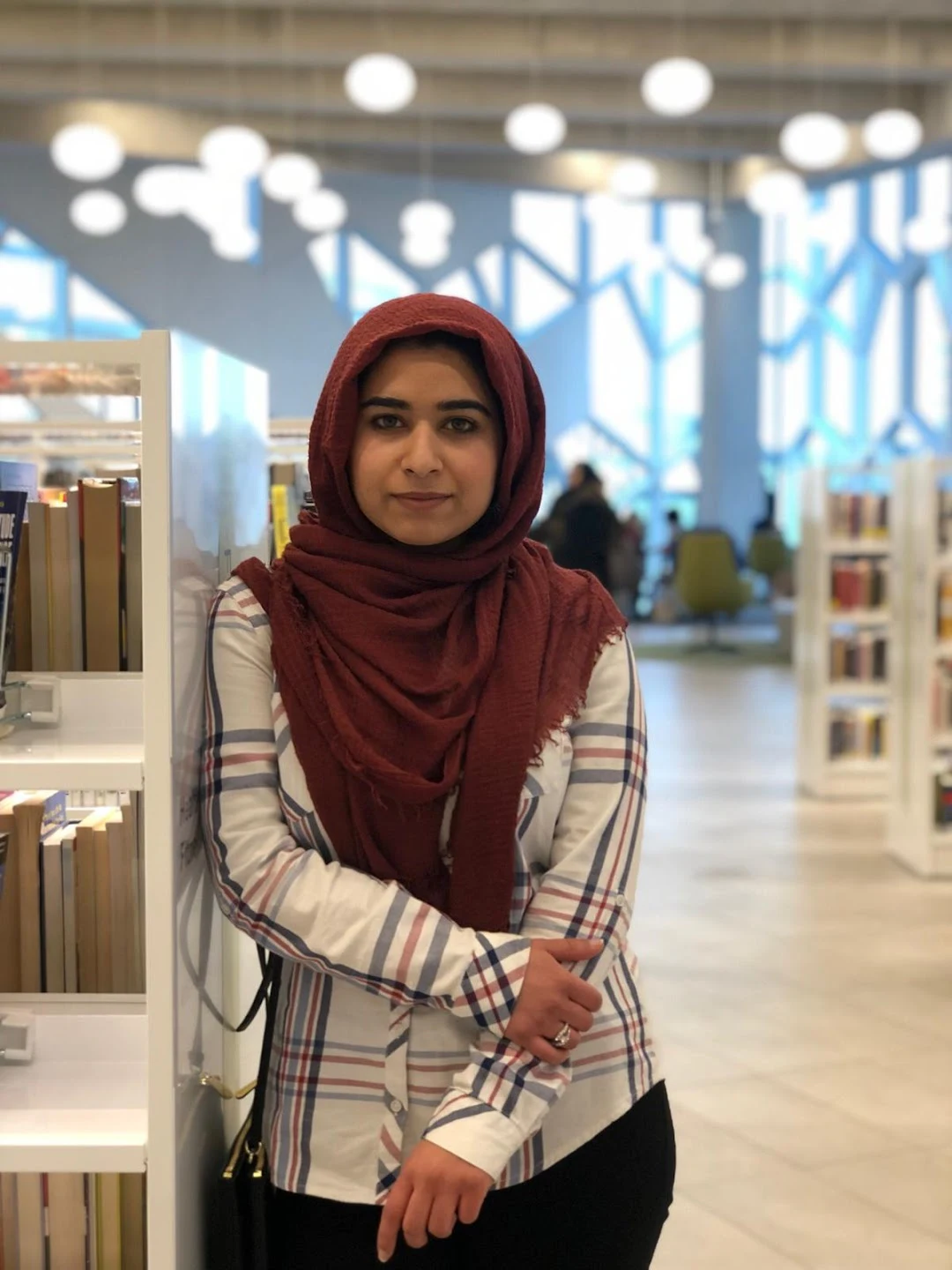
I'm Ummara Ashfaq, a Registered Psychotherapist (RP). I've sat with clients across Ontario, Alberta, and British Columbia who came to faith-based therapy carrying exactly that weight. This post is for anyone who's been wondering if therapy and Islam can coexist — and what faith-integrated counselling in Canada actually looks like in practice.
What Faith-Based Therapy in Canada Actually Means
Faith-based therapy in Canada is a clinical approach that integrates a client's religious or spiritual values into the therapeutic process — using evidence-based psychological methods (such as CBT or EMDR) alongside an understanding of Islamic principles, without requiring clients to set aside either their faith or their mental health needs.
It is not religious instruction. It is not a sheikh replacing a therapist. It is not prayer as a substitute for clinical support. It is the recognition that for many clients seeking faith-integrated care, spirituality is not separate from their psychology — it is their psychology. And any therapy that ignores that is working with only half the person in the room.
The therapist in a faith-integrated session holds space for tawakkul — the Islamic concept of trusting in God — alongside practical cognitive and emotional tools. They understand that nafs (the self, the soul) is a concept their client navigates daily, not an abstraction to be explained. They won't ask you to choose between your deen and your healing.
The Question I Hear Every Single Week
"But shouldn't my iman be enough?"
I've heard it from mothers in their thirties who haven't slept through the night in months. From young professionals who look fine on the outside and are unraveling on the inside. From newlyweds who love each other and can't figure out why they keep hurting each other.
And I get it — because I've wrestled with that question myself.
Here's what I want to say to anyone asking it: seeking help is not evidence of weak faith. The Prophet (peace be upon him) experienced grief so profound an entire year was named after it — Am al-Huzn, the Year of Sorrow. He sought counsel. He wept. He was held by those who loved him. If the best of creation was not expected to carry it all alone, the question we should be asking is why we decided we should be.
A 2022 study published in the Canadian Journal of Community Mental Health found that 65% of participants reported at least moderate levels of distress — but only 48.7% had ever sought professional support in their lifetime. (CJCMH, 2022) That gap is not a gap in faith. It is a gap in permission.
If that resonates — if you've been sitting in that gap and wondering if there's another way — I offer a free 15-minute consultation. No obligation, no intake forms, just a conversation. Book here at resilientfoundations.ca.
What Islam Actually Says About Seeking Help
There is a hadith — well-known, often repeated, rarely applied to mental health — in which the Prophet (peace be upon him) said: "Make use of medical treatment, for God has not made a disease without appointing a remedy for it." (Abu Dawud)
The Arabic word used — tadaawoo — means to seek a cure, to pursue healing actively. It is not passive. It is not "wait and see if your symptoms lift." It is a directive toward taking care of the body and mind that God entrusted to you.
Islamic scholars across centuries have written about the nafs — the self — as something that requires tending, cultivation, and sometimes healing. The concept of tazkiyat al-nafs (purification of the self) is not a metaphor. It is a practice, and it has always involved effort, honesty, and sometimes the guidance of others.
The discomfort many people feel around therapy often comes from conflating spiritual bypass — using religious practice to avoid confronting real psychological pain — with genuine faith. These are not the same thing. One uses God as an escape route. The other trusts God enough to do the hard work of looking inward.
A therapist who understands Islamic psychology can help you tell the difference. That is not a small thing.
What Faith-Integrated Therapy Actually Looks Like in a Session
I want to be concrete here, because I think the vagueness around this term is part of what makes people hesitant.
In a faith-integrated session, your beliefs are not checked at the door. If you want to explore how a particular struggle connects to your sense of tawakkul, we can do that. If you're grieving something and Quranic language is the framework through which you understand loss, I am not going to translate that into secular terminology and hand it back to you stripped of meaning.
What I am going to do — using evidence-based approaches like CBT and, where appropriate, EMDR — is help you examine the thought patterns, relational dynamics, and emotional responses that are keeping you stuck. We will look at what you believe, how those beliefs shape your behaviour, and where the belief system has been distorted by trauma, family messaging, or cultural expectations that were never yours to begin with.
That last part is important. Not everything called "Islamic" in your family of origin actually is. Some of it is culture. Some of it is fear. Some of it is intergenerational pain wearing religious clothing. Untangling that is clinical work. But it is also, for many of my clients, some of the most spiritually freeing work they have ever done.
Who Seeks Faith-Based Therapy in Canada — and Why Now
My clients across Ontario, Alberta, and British Columbia are not all in crisis. Many of them are high-functioning. They hold professional jobs, they parent well by every external measure, they show up for their communities. They come to therapy because something quiet has been wrong for a long time, and they've finally given themselves permission to address it.
Common presentations in faith-integrated therapy:
- Anxiety rooted in perfectionism — often connected to a belief (conscious or not) that emotional struggle signals spiritual failure
- Relationship difficulties that are entangled with cultural expectations and religious obligations
- Grief, including pregnancy loss, that hasn't been given space to exist in the community
- Identity struggles for those navigating faith in a secular Western context
- Trauma — including religious trauma — that has never been named as such
If any of these describe what you're carrying, you're not broken. You're human. And you deserve support that holds your whole self.
How to Find a Faith-Integrated Therapist in Canada Who Is Actually Registered
This matters more than people realise. "Counsellor" is not a protected title in many Canadian provinces. Anyone can call themselves a counsellor. A Registered Psychotherapist (RP), on the other hand, is regulated by the College of Registered Psychotherapists of Ontario (CRPO) — which means there are ethical standards, clinical supervision requirements, and a complaints process if something goes wrong.
When you're looking for a faith-based therapist in Canada, here is what to look for:
Registration: RP (CRPO) in Ontario. In BC and Alberta, look for a Registered Clinical Counsellor (RCC) or a psychologist. Verify registration on the college's public directory — not just the therapist's website.
Modality transparency: A good faith-integrated therapist will tell you how they integrate faith. Is it Quran-citing? Is it values-based? Do they use CBT, EMDR, or another evidence-based modality alongside the spiritual framework? Vague language is a flag.
Language match: For many clients, being able to speak Urdu or Hindi in session is not a luxury — it's the difference between surface-level conversation and real therapeutic depth. Emotions don't always translate.
Cultural competence: Not just "I work with faith-centered clients" — but evidence that they understand ummah, family honour dynamics, intergenerational pressure, and the specific experience of navigating faith in a Canadian context.
If you're looking for virtual therapy in Ontario, British Columbia, or Alberta, I'm a CRPO-registered psychotherapist offering faith-integrated individual therapy and couples counselling (Gottman Method). Sessions are fully virtual — secure video or phone. I work in English, Urdu, and Hindi. I offer direct billing through GreenShield, with discounted rates for students, seniors, and low-income clients.
If you've read this far, something in here landed. That recognition — that moment of "yes, that's exactly it" — is not nothing. It's the beginning of something. I offer a free 15-minute virtual consultation for anyone who wants to explore what support could look like. No pressure, no commitment. Just a conversation with someone who gets it.