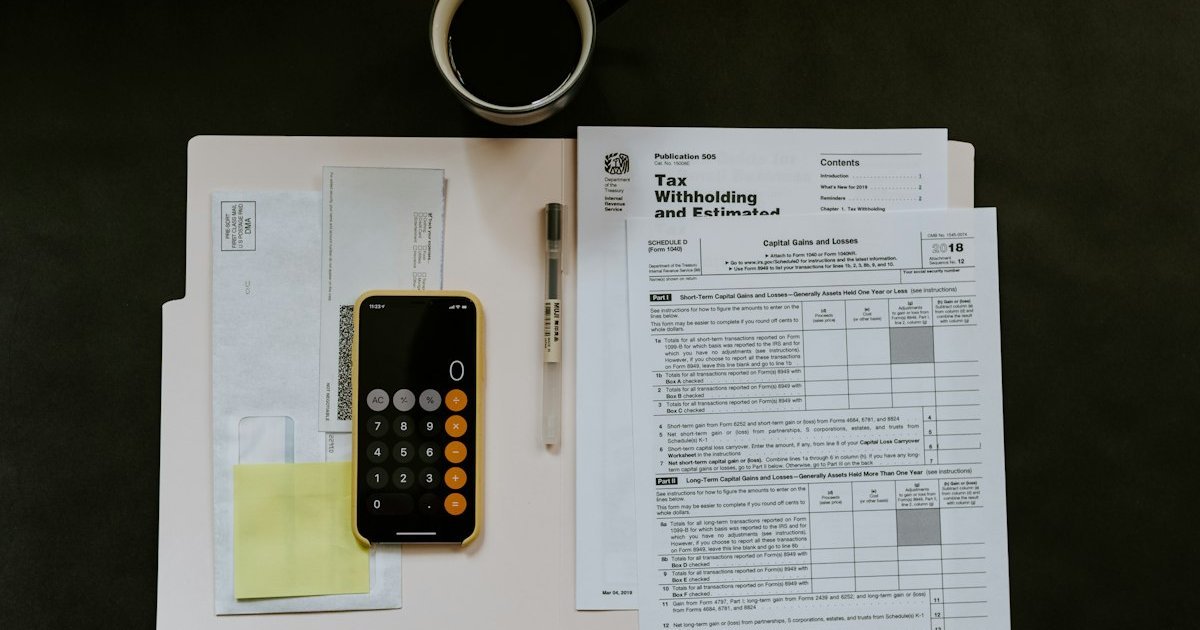
Before you toss that envelope of therapy receipts, read this. If you paid for sessions out of pocket, some of that money may come back at tax time, and plenty of people never claim it. I'm a Registered Psychotherapist, not a tax professional, so treat this as general information and confirm the details with the Canada Revenue Agency (CRA) or a tax preparer. My goal is to help you ask the right questions.
The short answer: You may be able to claim therapy on taxes in Canada through the medical expense tax credit if you paid out of pocket and your practitioner is on the Canada Revenue Agency's list for your province. Registered psychotherapists are recognized in Ontario and Quebec, and psychologists in every province. For 2026, only expenses above $2,890 or 3% of net income count.
In this article
- What is the medical expense tax credit?
- The 2026 threshold: $2,890 or 3% of net income
- Can you claim therapy on taxes? It depends on who you see
- Is therapy tax-deductible in Ontario?
- What if you live in Alberta or British Columbia?
- What you cannot claim
- Can I claim couples therapy?
- Who in the family should claim?
- Keeping therapy receipts for taxes
- A quick tax-season checklist
- How this fits with insurance and benefits
- Frequently asked questions
What is the medical expense tax credit?
The medical expense tax credit (METC) is a non-refundable federal tax credit. It lowers the amount of tax you owe, based on eligible medical expenses you paid during the year. Provinces also offer their own medical expense credits, calculated in a similar way.
"Non-refundable" means the credit can reduce your tax owing to zero, but it won't create a refund on its own if you don't owe tax.
You claim eligible medical expenses on lines 33099 and 33199 of your tax return. Line 33099 covers expenses for yourself, your spouse or common-law partner and your children under 18. Line 33199 covers other eligible dependants.
The 2026 threshold: $2,890 or 3% of net income
You don't get credit for every dollar you spend. You can only claim expenses above a threshold, which is the lesser of:
- 3% of your net income, or
- $2,890 for the 2026 tax year
According to the CRA's indexation table, the fixed threshold was $2,834 in 2025 and $2,890 in 2026.
Here's a simple example. If your net income is $60,000, 3% is $1,800. That's lower than $2,890, so your threshold is $1,800. If you spent $3,000 on eligible medical expenses, you could claim $1,200.
The federal credit is calculated at the lowest federal tax rate, which is 14% for 2026, plus a provincial credit that varies by province. On $1,200 of eligible expenses, that might mean a few hundred dollars back in total. The exact amount depends on your situation.
Can you claim therapy on taxes? It depends on who you see
The CRA keeps a list of authorized medical practitioners for each province and territory. A practitioner must be on that list for your province for their fees to count.
According to the CRA's list:
- Psychologists are recognized in every province and territory.
- Registered psychotherapists are recognized in Ontario and Quebec.
- Social workers are recognized in many provinces.
- Counsellors and other titles vary by province.
You can check the full table on the CRA's page of authorized medical practitioners for the medical expense tax credit. The list can change, so check it each year.
Is therapy tax-deductible in Ontario?
If you live in Ontario and see a Registered Psychotherapist registered with the College of Registered Psychotherapists of Ontario, your out-of-pocket fees generally count as eligible medical expenses. That includes sessions you paid for yourself and the portion your insurance didn't cover.
Ontario also has its own provincial medical expense credit, which works alongside the federal one. Your tax software will usually calculate both when you enter your expenses.
What if you live in Alberta or British Columbia?
This is where things get less clear. On the CRA's list, registered psychotherapists are recognized only for Ontario and Quebec, not for Alberta or BC. That reflects the fact that psychotherapy isn't currently a regulated profession in those provinces.
If you live in Alberta or BC and see an Ontario-registered psychotherapist virtually, it's not clear whether those fees qualify. The rules depend on how CRA treats services provided across provinces. Please ask a tax professional or contact the CRA before claiming.
If tax savings matter a lot to you, keep this in mind when choosing a provider. My article on therapy costs in Canada covers fees, coverage and provincial differences in more detail.
In BC, psychotherapy is scheduled to become a regulated profession under the College of Health and Care Professionals of BC on November 29, 2027. The CRA list may change after that, so check again in future years.
What you cannot claim
A few rules trip people up:
- Reimbursed amounts. If your insurance or health spending account paid for part of a session, you can only claim the part you paid yourself.
- Amounts claimed by someone else. You can't claim the same expense twice in your household.
- Unofficial practitioners. Sessions with someone not on the CRA list for your province don't count.
- Missing receipts. You need a receipt that shows the practitioner's name, credentials, the date and the amount paid.
Can I claim couples therapy?
Couples therapy can be an eligible medical expense if the practitioner is on the CRA list for your province. Generally, one partner claims the expense. Because couples sessions are often for both of you, ask a tax professional how to handle the claim in your situation.
Who in the family should claim?
Spouses and common-law partners can pool their family's medical expenses and claim them on one return. Because the threshold is based on net income, it often makes sense for the partner with the lower net income to claim, so more expenses count. Tax software usually helps you compare.
You can also choose any 12-month period that ends in the tax year. For example, if you had heavy expenses from March 2026 to February 2027, you could use that period on your 2027 return. This can help if your therapy started partway through a year.
Keeping therapy receipts for taxes
Good records make tax time easier. Keep:
- Every receipt, even if your insurance covered part of it
- Insurance statements showing what was reimbursed
- A simple list of dates, providers and amounts
My receipts include my full name, my registration number (CRPO #15095), the date, the service and the fee. The CRA can ask for receipts later, so keep them for at least six years.
A quick tax-season checklist
- Gather all therapy and medical receipts from 2026.
- Subtract anything your insurance or HSA paid.
- Check the CRA list to make sure your practitioner counts in your province.
- Decide which spouse should claim, and which 12-month period to use.
- Enter the expenses in your tax software or give them to your preparer.
- Keep your receipts in a safe place.
The 2026 tax filing deadline for most individuals is April 30, 2027.
How this fits with insurance and benefits
Tax credits are one piece of the cost picture. Insurance and health spending accounts usually do more to reduce costs. My article on therapy costs in Canada covers fees, coverage and low-cost options, and my post on financial anxiety explores the stress that often sits underneath money and medical bills.
To make this concrete, here's a typical example, with details blended from many stories so no one is identifiable. A couple in Hamilton paid $2,600 out of pocket for therapy in 2026, after insurance. The wife's net income is $40,000, so her threshold is $1,200. By claiming on her return, they can claim $1,400 of eligible expenses. Their tax preparer confirms the numbers, and they file on time.
Not sure where to start? A free 15-minute consultation is a low-pressure way to talk about what's going on and see if working together feels right.
Frequently asked questions
Can you claim therapy on taxes in Canada?
Yes, in many cases. Therapy can count toward the medical expense tax credit if you paid out of pocket and your practitioner is on the CRA's list of authorized medical practitioners for your province.
Is psychotherapy a medical expense in Ontario?
Generally yes. The CRA recognizes registered psychotherapists in Ontario, so out-of-pocket fees paid to an Ontario RP usually count as eligible medical expenses.
Can Alberta or BC residents claim an Ontario RP?
It's unclear. Registered psychotherapists aren't listed for Alberta or BC on the CRA's table. Ask a tax professional or the CRA before claiming.
What is the 2026 medical expense threshold?
For 2026, you can claim eligible expenses above the lesser of 3% of your net income or $2,890.
Which receipts do I need to claim therapy on taxes?
Keep receipts showing the practitioner's name and credentials, the date of each session and the amount paid, along with any insurance statements showing what was reimbursed.
If you are ready to begin
If cost has been holding you back from therapy, knowing your options helps. I offer online sessions across Ontario, Alberta and BC, direct bill GreenShield and Sun Life and give detailed receipts for every session. Book a free 15-minute consultation to talk about what fits your budget. Learn more about individual counselling online.
Sources
- Canada Revenue Agency. Authorized medical practitioners for the medical expense tax credit
- Canada Revenue Agency. Indexation adjustment for personal income tax and benefit amounts
- College of Health and Care Professionals of BC. Legislation
Clinical disclaimer: This article provides psychoeducational information only and does not constitute clinical advice or establish a therapeutic relationship. If you are in crisis, please call or text 9-8-8 (Suicide Crisis Helpline, Canada), available 24/7.